Last Updated: February 12, 2026
Introduction to the Policies Module
In the web portal’s Policies Module, you can view and modify existing Insurance Policies. You can edit existing policies, add new ones individually, or upload multiple policies at once using bulk import.
Sections
The Policies Module is divided into three main sections: Manage, Add and Bulk Import.
Manage Policies
The Manage Policies section displays all policies you are currently responsible for.
You can:
-
Search for a specific policy using the search bar
-
Filter policies by region
-
Edit a policy by clicking the green pen icon next to the policy name, which opens the Policy Details page.
Add Policies
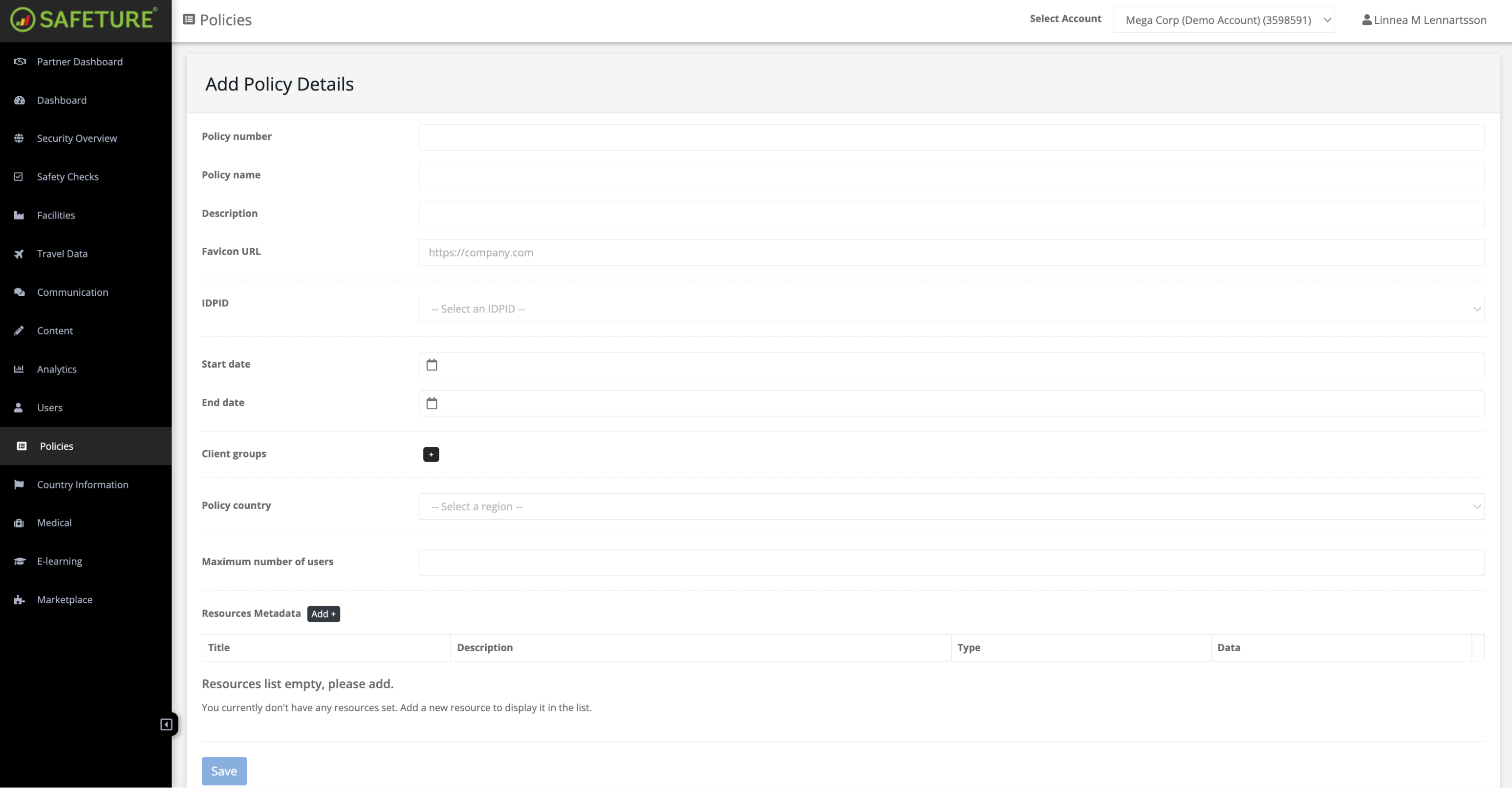
To add a new policy, click Add and complete the fields below:
Policy Number: Unique identifier for the policy. This field cannot be edited.
Policy Name: Display name of the policy
Description: Free-text field used to describe the policy. This field can be used for segmentation, searching, and filtering.
URL: Used as metadata for the Policy Holder. The URL is primarily used to display an icon or visual reference in interfaces such as the Partner Dashboard, helping users identify and filter policies more easily.
Identity Provider ID (IDPID): Identifies the Identity Provider associated with the policy. Is Pre-configured during system setup and must be provided as a UUID.
Start time: Date and time when the policy becomes active.
This determines when users are allowed to start registering in the app under this policy. Supported formats (ISO 8601):
-
YYYY-MM-DD -
YYYY-MM-DDTHH:MM:SS+00:00
End time: Date and time when the policy expires.
This determines when users will be logged out of the app. Supported formats (ISO 8601):
-
YYYY-MM-DD -
YYYY-MM-DDTHH:MM:SS+00:00
Policy Groups: Refers to client groups associated with the policy. The client group will among other thoings define which assistance phone numbers the end user will have available in the platform. Groups are pre-configured during setup and Value must be provided as a UUID.
Policy Country: Country associated with the policy. Must be entered using two-letter country codes according to ISO 3166-1 alpha-2 (e.g. SE, DE, US).
Maximum number of users: Defines the maximum number of users that can be registered under this policy.
Resources Metadata: Allows you to attach structured resources to a policy. These resources are typically surfaced to end users in the app, like external links or custom interfaces. Each metadata entry represents one resource (for example, an ID card link or claims page). Resources Metadata fields include:
-
Title: Display name of the resource
-
Description: Short explanation of what the resource is used for.
-
Type: Defines the category of the resource.
Select one of the predefined options from the dropdown menu, such as:-
ID Card
-
Assistance Information
-
Certificate
-
Claims
-
URL
-
Data: The actual resource value. Currently, this field expects a URL pointing to the resource (for example, a PDF, webpage, or external system).
Policy Bulk Import
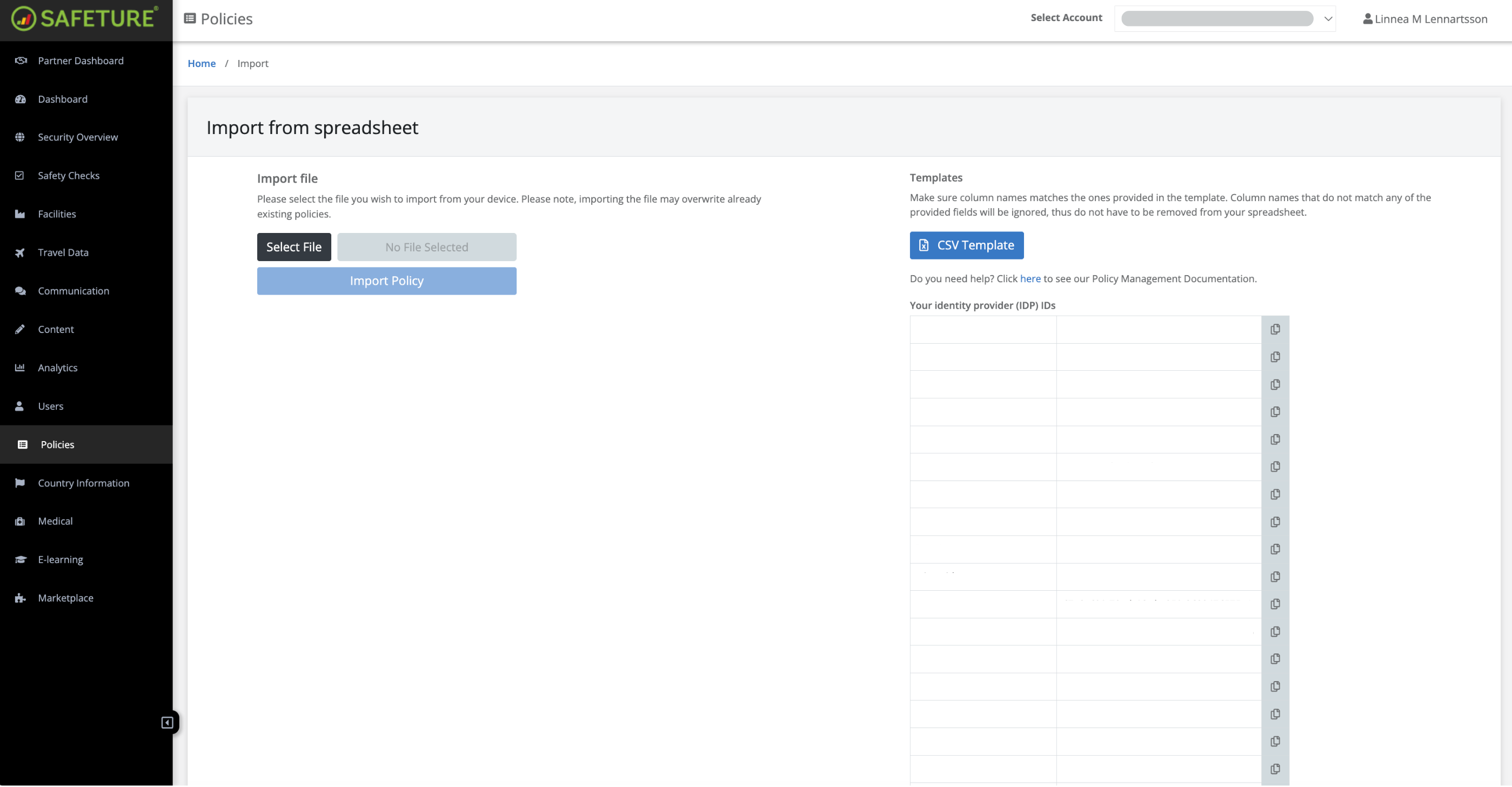
The Bulk Import section allows you to upload multiple policies at once using a predefined file format.
This is recommended when onboarding large numbers of policies. Read our extensive guide on how to bulk upload policies here.